



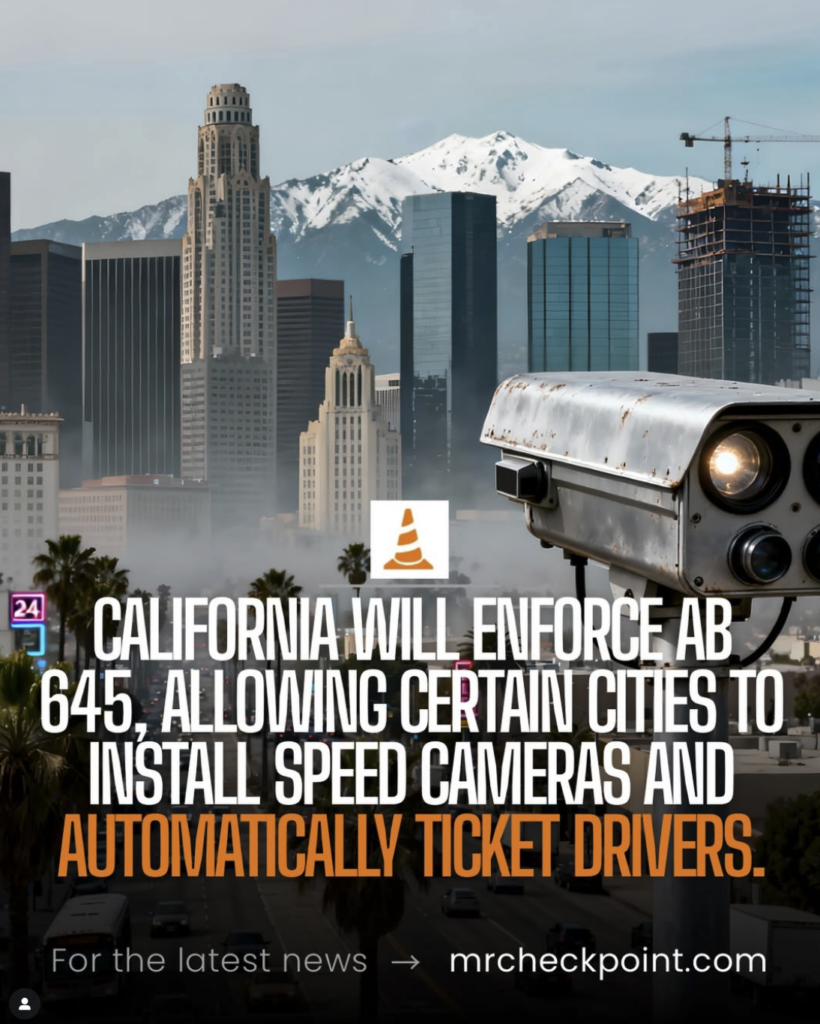
Beginning January 1, 2026, Los Angeles will begin enforcing automated speed cameras under California Assembly Bill 645. As a result, many drivers will notice a major change in how the city enforces speeding laws.
Instead of relying solely on traffic stops, Los Angeles will use cameras to record vehicles traveling above posted speed limits. When the system detects a violation, it will mail a citation to the registered owner of the vehicle, similar to how red light cameras currently operate.
What AB 645 Changes for Drivers
California lawmakers approved AB 645 in October 2023. Since then, participating cities have prepared to launch a five year pilot program focused on automated speed enforcement.
Under this law, Los Angeles may install speed cameras in areas the city identifies as high risk. These locations typically include school zones, parks, construction areas, senior centers, and busy commercial corridors. Because of this targeted approach, officials say the program focuses on safety rather than widespread surveillance.
Importantly, the law requires clear signage. Therefore, drivers should expect notices posted near areas where speed cameras operate.
How Speed Camera Tickets Work in Los Angeles
Once enforcement begins, speed cameras will activate when a vehicle exceeds the speed limit by at least 11 miles per hour. At that point, the system captures evidence and initiates a citation process.
Ticket amounts increase based on speed:
If a driver travels 11 to 15 miles per hour over the limit, the fine is $50.
If a driver travels 16 to 25 miles per hour over the limit, the fine increases to $100.
If a driver exceeds the limit by 26 miles per hour or more, the fine reaches $200.
Finally, driving 100 miles per hour or more may result in a $500 citation.
Because the ticket goes to the registered owner, drivers should stay aware of who operates their vehicle.
What Happens at Extremely High Speeds
Separately from the camera program, California law already addresses extreme speeding. When the California Highway Patrol documents a driver traveling over 100 miles per hour, the Department of Motor Vehicles may take further action.
According to public statements from state officials, this approach allows authorities to intervene early. By doing so, the state aims to reduce severe crashes before they occur.
What Drivers Should Do Now
As the rollout approaches, drivers should pay close attention to posted speed limits, especially in areas marked with speed camera signage. In addition, staying informed about how the program works can help avoid unexpected citations.
Although this program remains a pilot, cities must collect and publish data on safety outcomes. Therefore, public oversight will continue throughout the five year period.
Why This Matters
At MrCheckpoint, we focus on transparency and public awareness. Automated enforcement changes how traffic laws affect everyday people. Because of that, understanding the rules matters.
For more trusted legal information and access to verified attorneys, visit https://www.mrcheckpoint.com. MrCheckpoint is a verified legal directory created to help people understand their rights and find legal support when needed.
