



This piece reflects my opinion and interpretation of what I observed while sitting in the courtroom, based on my own notes, recollections, and reporting. It is intended as commentary and analysis, not as a verbatim transcript or official court record.
I am not pretending to be detached from what this case means. I listened in court as a reporter, but also as an Angeleno, an advocate, and a student of the law. What I heard left me with the same conclusion I carried out of that courtroom: No one is safe in a dressing room in Los Angeles.
How Valentina Died
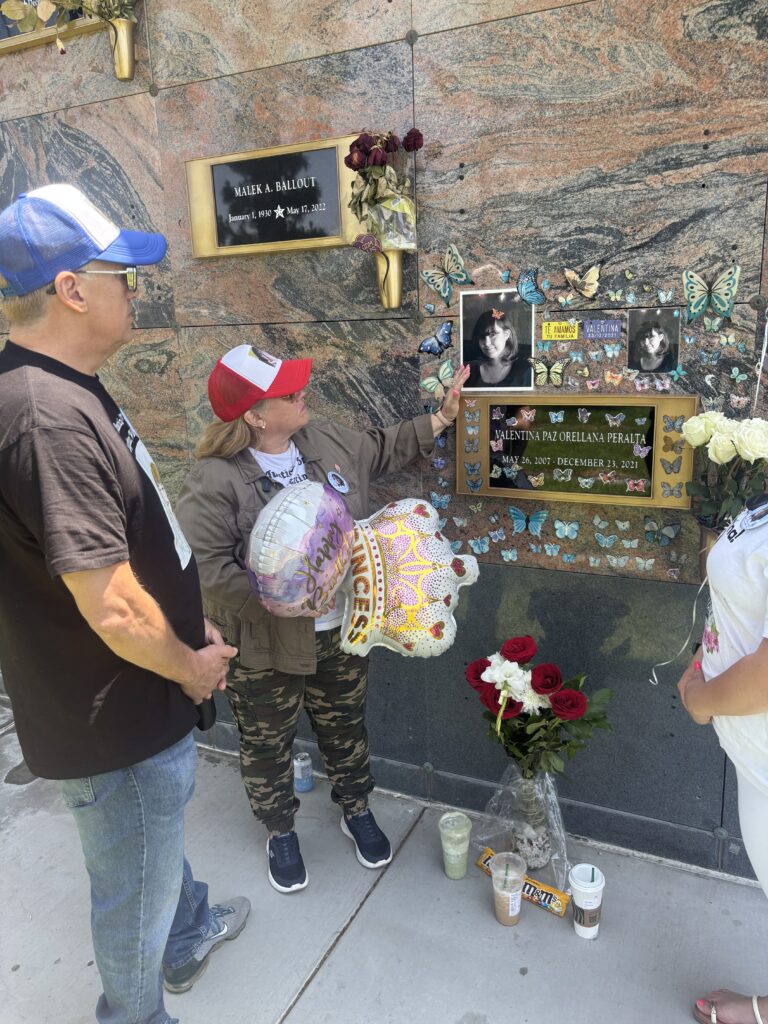
This case centers on the killing of Valentina Orellana-Peralta, the 14-year-old girl who was shot and killed by an LAPD AR-15, rifle bullet while hiding in a fitting room with her mother, Soledad Peralta, inside a Burlington store in North Hollywood in December 2021 the day before Christmas Eve. Officer William Dorsey Jones Jr. fired three rounds at Daniel Elena Lopez, and one of those rounds ricocheted and struck Valentina through the wall. She died in her mother’s arms. Those basic facts are indisputable.
I never knew Valentina personally. I met the family after this happened. That matters to say plainly. I am not claiming a relationship I did not have. But distance from a person is not distance from the truth of what was done to them, and it is certainly not distance from the moral weight of what a city is now asking the public to accept. And frankly it’s very scary.
What the City Is Asking the Public to Accept
Because what the city appears to be arguing is not only that Valentina’s death was tragic. It is that it was reasonable. I can’t but help hear the defense argue that Officer Jones used the right weapon, shot the right amount of times, and that ultimately Valentina’s life is just the collateral damage of police doing their job. I would say to make everyone more safe, but Officer Jones did quite the opposite. His actions resulted in a 14 year-old dying in her mothers arms in a dressing room after being shot with a military style weapon.
Is this what the city is saying can happen when police are doing what they are supposed to do? And if that is the theory, then every person in Los Angeles should be alarmed. NO ONE IS SAFE IN A DRESSING ROOM IN LOS ANGELES.
What the Plaintiffs Want the Jury to See
Attorney Haytham Faraj, representing Valentina’s family, argued that Valentina and her mother would have been safe if the responding officers had followed the rules and policies already in place for this type of situation. Attorney Jim Touchstone, representing the city, defended Jones as “an elite officer” who followed his training and believed he was responding to a “mass casualty event.” He was responding to a man who had a bike lock and was reported to not be wearing pants. There were no causalities when officer Jones arrived. The only casualties on December 23, 2021, in Burlington Department Store were caused by Officer Jones. If Officer Jones didn’t show up to work that day or even followed the many commands to “slow down” or “sling that” it’s very possible Valentina would still be alive today.
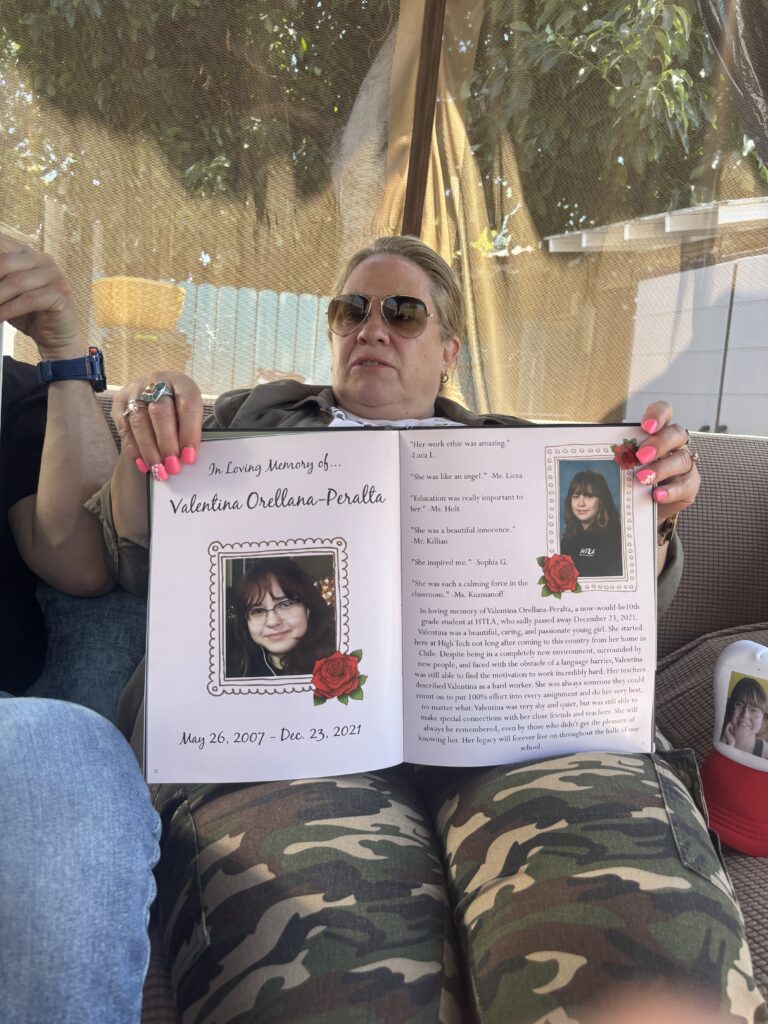
From the proceedings I observed over two days, the plaintiffs’ theory was not complicated. It was devastatingly simple. Jones, they argued, inserted himself into a tactical situation that already had structure, moved ahead of command, ignored repeated efforts to slow things down, and escalated to deadly force inside a crowded department store when Officer Head was positioned with a less-lethal 40mm option. Again and again, the courtroom returned to the fundamentals officers are taught: identify command, follow command, keep your weapon safe until you intend to fire, know what is behind your target, and do not fire under conditions that unreasonably endanger bystanders. Remember, it’s the day before Christmas Eve.
Officer Jones made several poor decisions and choices made in rapid succession while carrying a rifle in a space filled with civilians, near fitting rooms, in a store packed just before Christmas. The plaintiffs’ case, as I heard it, was not merely that the outcome was tragic. It was that the tragedy was foreseeable.
When “Chaos” Becomes an Excuse
Police do not get to invoke confusion only after a child is dead. The entire point of training is to govern conduct in chaotic moments. The entire point of command structure is to prevent freelancing. The entire point of policy is to reduce the chance that innocent people hiding nearby end up dead because an officer acted too fast, saw too little, or assumed too much.
If the city’s answer is that everything happened quickly, then the obvious question is: why did it happen that quickly, and who made it happen that quickly? Was he late? What commands did he not follow? If the city’s answer is that Jones perceived a threat, that does not end the inquiry. It begins it. What did he perceive? What did he fail to perceive? What warnings did he ignore? What alternatives were present? What responsibilities came with deploying that weapon in that environment? The suspect he shot at three times with a rifle was 12-15 feet away and was holding a bike lock. The suspect was not a threat to anyone at that time and non-lethal force was not only an option but was the weapon the officer in charge intended to be deployed given the circumstances.
No One Is Safe in a Los Angeles Dressing Room
If the city succeeds in framing Valentina’s death as an unfortunate but reasonable byproduct of police response, then it is effectively telling the public that this falls within the range of normal. It is telling us that a child or any one of us can be killed in a dressing room and the system can still insist it worked the way it was supposed to. That is ridiculous.
Los Angeles residents should hear the city’s theory for what it really is. It is not merely a defense of one officer. It is a defense of a model of policing in which officers can show up late to a scene, move ahead of command, escalate with a rifle in a crowded store, fire so quickly that the entire event is later explained away as too fast to meaningfully assess, kill two people, and still be described as acting within the bounds of acceptable judgment. If that is the standard, then none of us are safe from the consequences of police error, because the city has already decided the error is just part of elite policing.
And that brings us to damages.
Why $100 Million Is Not Too Much
Is it worth $100 million? Some people hear a number like that and recoil automatically. I do not. If the city wants to justify this shooting as reasonable, then $100 million is the city getting off cheap. There is no verdict that can truly account for Soledad Peralta, a mother who had to hold her daughter Valentina as she died in her arms. There is no judgment that can restore the life taken from Valentina. There is no damages figure that can truly measure what Juan Pablo lost when police violence stole his daughter from him. The legal system can assign a number. It cannot restore what was destroyed. Justice is impossible, so they strive for accountability.
There is also a Southern California benchmark hanging over this trial. Attorney Nick Rowley, who represents the family, recently secured a $30 million settlement from the City of San Diego in the police killing of Konoa Wilson, the largest settlement in world history for a police killing. That matters not because the cases are identical, but because jurors and the public alike understand that major verdicts and settlements are often the only thing that forces institutions to take reform seriously.
What a Verdict Could Force Los Angeles to Confront
My own view is simple. If a jury wants only to compensate this family, it may reach a very large number. But if a jury wants policies not just reviewed, not just revisited, but effectively rewritten by force of consequence, then the number would have to be much larger. A billion-dollar verdict would overnight change the way LAPD functions, in my opinion. It would do what commissions, reform, carefully worded press releases, internal reviews, and promises of lessons learned have failed to do. It would make the cost of this kind of policing impossible to ignore and continue.
That may sound extreme to some. But what is actually extreme is a 14-year-old girl being killed in a fitting room by LAPD gunfire, followed by a courtroom strategy that asks the public to see her death as tragic but reasonable.
I am a journalist. I am also a Los Angeles native, an advocate, and a law student. I understand the difference between evidence and argument. I understand what a courtroom is for. I understand that the city has legal theories available to it and every right to mount a defense. But the public has a right to draw its own moral conclusion from that defense. Mine is this: if this is what the city says proper policing looks like, then no one is safe in a Los Angeles dressing room.
Because once this becomes normal, every ordinary place becomes newly dangerous. A department store. A changing room. A holiday shopping trip. A mother trying to protect her child. A family doing something painfully mundane, only to be told later that the police response that killed their daughter was still within the range of acceptable professional judgment.
Valentina Orellana-Peralta should not be remembered as collateral damage to “law and order.” She should be remembered as proof that something is deeply broken when a city can watch a child die this way and still spend its energy defending the machinery that killed her.
If Los Angeles cannot say clearly that this was intolerable negligence, then Los Angeles has learned nothing. And if the only language this city understands is a verdict large enough to shake it awake, then maybe that is exactly what justice now requires.
